Spaietacle: The Rise of Immersive Spatial Spectacle in Modern Digital Culture

Introduction
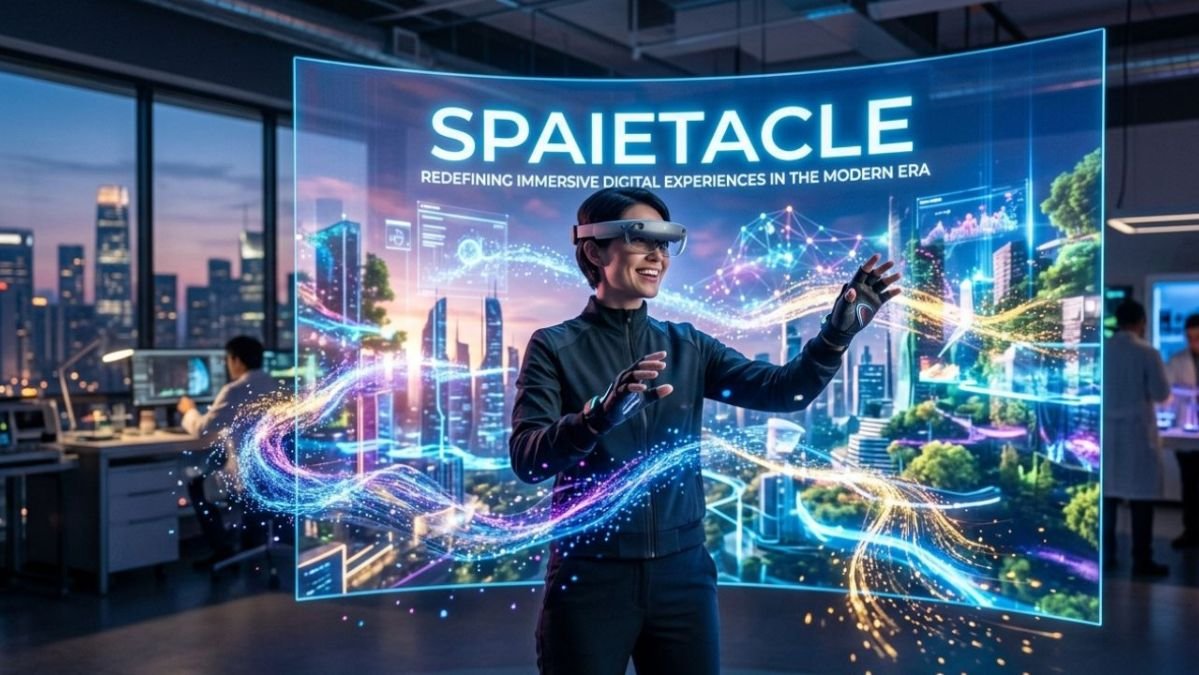
In today’s rapidly evolving digital world, attention is no longer captured by simple visuals or static content. Instead, audiences are drawn toward experiences that feel alive, interactive, and emotionally engaging. This shift has given rise to a new conceptual idea known as—a fusion of “space” and “spectacle.” It represents immersive environments where storytelling, design, and technology merge to create powerful sensory experiences. Whether in digital media, physical installations, or branding campaigns, spaietacle is redefining how humans interact with content and environments.
Quick Bio Table: Spaietacle Concept Overview
| Feature | Description |
|---|---|
| Concept Name | Spaietacle |
| Type | Digital + Spatial Experience Concept |
| Core Idea | Fusion of space, storytelling, and visual spectacle |
| Key Mediums | AR/VR, digital design, physical installations |
| Main Goal | Immersive audience engagement |
| Related Fields | UX/UI design, architecture, media arts, marketing |
| Experience Type | Interactive and sensory-rich environments |
What is Spaietacle?
Spaietacle is an emerging conceptual term used to describe experiences that blend spatial design and visual spectacle into one unified immersive environment. Unlike traditional media that positions the audience as passive viewers, turns them into active participants.
It focuses on transforming space—whether digital or physical—into a storytelling medium. This means that the environment itself becomes part of the narrative, guiding emotions, actions, and perception.
In simpler terms, spaietacle is not just something you watch; it is something you enter, experience, and feel.
The Evolution of Immersive Experiences
The idea behind spaietacle did not appear suddenly. It evolved from several technological and artistic movements:
- Traditional theater and stage design
- Digital animation and multimedia art
- Virtual reality (VR) environments
- Augmented reality (AR) overlays
- Interactive installations in museums and exhibitions
As technology advanced, creators began combining these elements to build fully immersive environments. is essentially the next step in this evolution, where space itself becomes an emotional and interactive interface.
Core Elements of Spaietacle
Spaietacle experiences are built on several key pillars:
1. Spatial Design
The foundation of any is the environment itself. This could be a digital world, a physical installation, or a hybrid space. The design is carefully structured to guide movement and attention.
2. Visual Spectacle
Lighting, animation, projection mapping, and digital effects are used to create visually striking environments that immediately capture attention.
3. Interactivity
Unlike passive media, environments respond to user behavior. Movement, touch, voice, or even emotional input can influence the experience.
4. Storytelling
Every spaietacle is built around a narrative. The story unfolds as users explore the space, making each journey unique.
5. Sensory Engagement
Sound, visuals, motion, and sometimes even haptic feedback are combined to fully engage the senses.
Applications of Spaietacle
Spaietacle is not limited to one industry. Its applications are expanding across multiple fields:
Art and Design
Artists use techniques to create immersive installations that allow audiences to walk through creative worlds.
Museums and Exhibitions
Modern museums are adopting interactive exhibits that transform learning into an engaging spatial experience.
Marketing and Advertising
Brands use spaietacle-based campaigns to create unforgettable product launches and immersive brand storytelling environments.
Gaming and Entertainment
Video games and virtual environments are becoming more spatially immersive, blurring the line between player and world.
Architecture
Architects are designing spaces that integrate digital elements and responsive environments.
Why Spaietacle is Becoming Important
Several global trends are driving the popularity of :
- Increasing demand for immersive content
- Growth of VR and AR technologies
- Decline of attention span in traditional media
- Rise of experiential marketing
- Advancements in AI-driven environments
People no longer want to simply consume content—they want to experience it. Spaietacle fulfills this demand by transforming content into environments.
Psychological Impact of Spaietacle
One of the most powerful aspects of is its psychological effect on users. It creates:
- Strong emotional engagement
- Enhanced memory retention
- Sense of presence and immersion
- Increased curiosity and exploration behavior
Because users are actively involved, the experience feels more meaningful and memorable compared to traditional media formats.
Challenges of Development
Despite its potential, spaietacle also comes with challenges:
High Production Cost
Creating immersive environments requires advanced technology and design expertise.
Technical Complexity
Integrating interactive systems, real-time rendering, and sensory inputs is technically demanding.
Accessibility Issues
Not all users have access to VR/AR devices or high-performance systems.
Design Balance
Too much stimulation can overwhelm users, reducing effectiveness.
Future of
The future of spaietacle is closely tied to advancements in:
- Artificial Intelligence (AI)
- Mixed Reality (MR)
- Spatial computing
- Holographic displays
- Smart environments
In the coming years, spaietacle may evolve into everyday experiences such as smart homes, interactive classrooms, and fully immersive digital cities.
It will likely become a standard in entertainment, education, and digital communication.
SEO Importance of Spaietacle Content
From a digital marketing perspective, is a low-competition, high-growth keyword. As interest increases, early content creators can rank easily by producing:
- Educational articles
- Concept explanations
- Industry applications
- Future predictions
This makes it a strong topic for niche blogging and tech-focused websites.
Conclusion
Spaietacle represents a powerful shift in how humans experience digital and physical environments. By merging space, storytelling, and spectacle, it transforms passive observation into active participation. As technology continues to evolve, will likely become a central concept in how we design entertainment, education, and digital interaction systems.
Ultimately, it is not just a trend—it is a new way of thinking about experience itself.
In conclusion, spaietacle is shaping the future of immersive design and redefining the boundaries between reality and digital expression.