SOA OS23: The Future of Modern Service-Oriented Architecture in Enterprise Technology

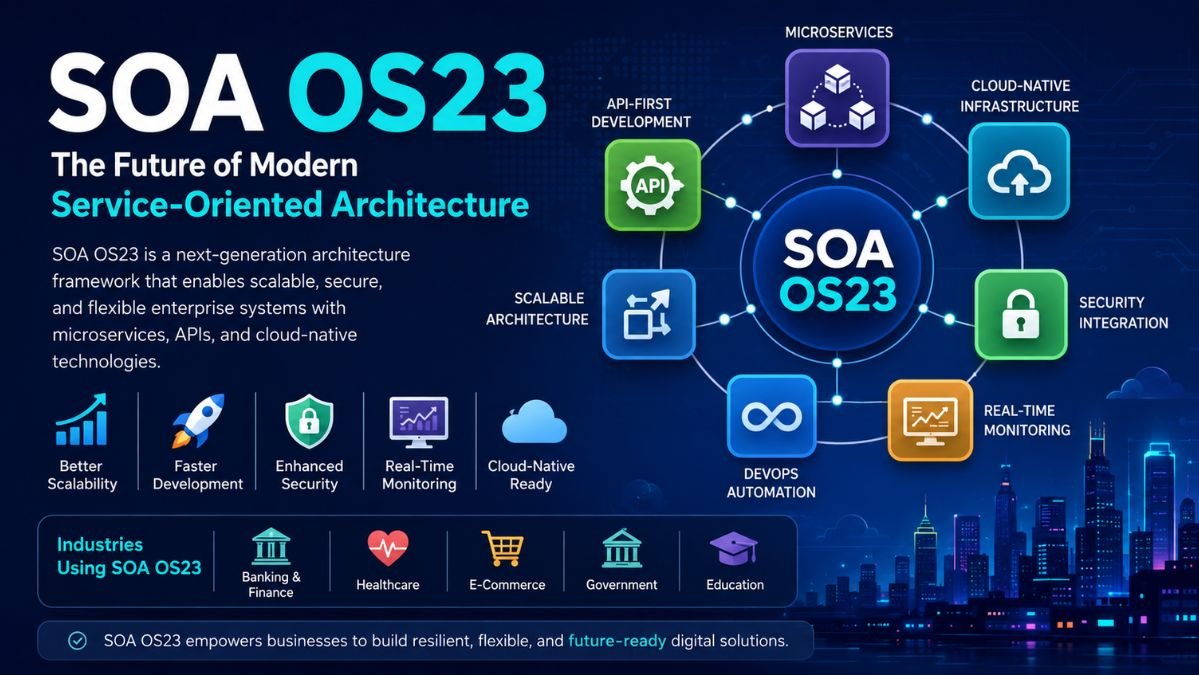
In today’s rapidly evolving digital world, businesses are constantly searching for technologies that improve scalability, flexibility, and operational efficiency. One emerging term gaining attention in enterprise IT discussions is SOA OS23. While the keyword has multiple interpretations across industries, it is most commonly associated with a modern evolution of Service-Oriented Architecture (SOA) designed for cloud-native systems, microservices, and enterprise automation.
SOA OS23 represents a new generation of architectural practices that help organizations build faster, smarter, and more scalable digital infrastructures. From financial institutions to e-commerce platforms and healthcare systems, companies are increasingly adopting SOA principles to modernize legacy systems and prepare for future technological demands.
Quick Bio Table About SOA OS23
| Topic | Details |
|---|---|
| Keyword | SOA OS23 |
| Main Meaning | Modern Service-Oriented Architecture Framework |
| Industry | Enterprise IT & Cloud Computing |
| Core Technology | APIs, Microservices, Cloud Infrastructure |
| Main Purpose | Scalable and Modular Enterprise Systems |
| Key Features | API-first design, cloud-native support, security integration |
| Popular Usage | Banking, healthcare, e-commerce, government systems |
| Related Technologies | Kubernetes, Docker, DevOps, AI Integration |
| Architecture Style | Distributed & Service-Based |
| Future Scope | AI-driven automation and serverless computing |
Understanding SOA OS23
SOA OS23 is considered a next-generation framework that expands upon traditional Service-Oriented Architecture concepts. Traditional SOA was already popular among enterprises because it allowed different applications and services to communicate efficiently. However, older SOA systems often struggled with scalability, complexity, and cloud integration.
SOA OS23 addresses these issues by incorporating modern technologies such as:
- Microservices architecture
- Cloud-native deployment
- API-driven communication
- Containerization
- Automation tools
- Real-time monitoring systems
The primary goal of SOA is to make enterprise applications more adaptable and easier to manage in modern digital ecosystems.
Evolution from Traditional SOA to SOA OS23
Traditional SOA relied heavily on SOAP protocols and centralized enterprise service buses. While effective during its time, the architecture became difficult to maintain as systems grew larger.
SOA OS23 modernizes this approach by using lightweight communication protocols and distributed systems. Instead of relying on a single central infrastructure, organizations can now run independent services that work together seamlessly.
Some major differences include:
| Traditional SOA | SOA OS23 |
|---|---|
| SOAP/XML communication | REST APIs & GraphQL |
| Monolithic deployments | Microservices architecture |
| Limited scalability | Cloud-native scalability |
| Basic security | Zero-trust security model |
| Manual operations | Automated DevOps pipelines |
| On-premise infrastructure | Hybrid and multi-cloud support |
This transformation allows organizations to become more agile and competitive in the digital economy.
Key Features of SOA OS23
1. Cloud-Native Infrastructure
One of the most important features of SOA is its compatibility with cloud-native environments. Businesses can deploy services across:
- Public clouds
- Private clouds
- Hybrid cloud systems
- Multi-cloud infrastructures
This flexibility ensures better performance and cost optimization.
Technologies like Docker and Kubernetes play a major role in supporting cloud-native deployments under SOA OS23 frameworks.
2. API-First Development
Popular API technologies include:
SOA heavily depends on APIs for communication between services. APIs allow different systems and applications to exchange data efficiently.
- REST APIs
- GraphQL
- gRPC
- Event-driven messaging systems
An API-first approach makes integration faster and simplifies application development across multiple platforms.
3. Microservices Architecture
Microservices are at the heart of SOA OS23. Instead of building one massive application, businesses create smaller independent services that handle specific tasks.
For example:
- Payment processing service
- User authentication service
- Inventory management service
- Notification service
Each service can operate independently, improving scalability and maintenance.
4. Enhanced Security
Security has become a top priority for modern enterprises, and SOA introduces advanced security frameworks such as:
- OAuth 2.0 authentication
- JWT tokens
- Role-based access control
- Zero-trust architecture
- End-to-end encryption
These features help protect sensitive business data and reduce cybersecurity risks.
5. Real-Time Monitoring and Observability
SOA OS23 systems are designed with observability in mind. Organizations use advanced monitoring tools to track service health and application performance.
Popular tools include:
- Prometheus
- Grafana
- ELK Stack
- Splunk
Real-time monitoring helps businesses detect issues quickly and improve system reliability.
Benefits of SOA OS23
Improved Scalability
One of the biggest advantages of SOA is its scalability. Businesses can scale individual services instead of scaling entire applications.
For example, during high traffic periods, only the payment service may require additional resources while other services remain unchanged.
This approach reduces infrastructure costs and improves efficiency.
Faster Development and Deployment
Development teams can work on separate services simultaneously, which speeds up:
- Software updates
- Feature releases
- Bug fixes
- Testing processes
Combined with DevOps automation, SOA OS23 enables continuous integration and continuous deployment (CI/CD).
Better System Flexibility
SOA O23 allows businesses to integrate:
- Legacy systems
- Cloud applications
- AI platforms
- IoT devices
- Third-party services
This flexibility makes digital transformation easier for organizations.
Reduced Downtime
Since services operate independently, failures in one component usually do not affect the entire system.
This improves business continuity and overall user experience.
Industries Using SOA OS23
Banking and Financial Services
Banks use SOA OS23 for:
- Real-time transactions
- Fraud detection
- Online banking systems
- Regulatory compliance
The architecture supports secure and scalable financial operations.
Healthcare Industry
Healthcare organizations implement SOA OS23 to manage:
- Electronic medical records
- Telemedicine platforms
- Patient portals
- Secure data exchange
This improves operational efficiency and patient care.
E-Commerce Platforms
Online retailers use SOA to support:
- Order management
- Payment gateways
- Customer personalization
- Inventory synchronization
Microservices help e-commerce businesses handle large amounts of traffic during peak shopping seasons.
Government and Public Services
Governments use SOA OS23 for digital transformation initiatives, including:
- Identity management
- Public data systems
- Online citizen services
- Departmental integration
The architecture helps improve transparency and operational efficiency.
Challenges of Implementing SOA OS23
Despite its advantages, SOA also presents certain challenges.
System Complexity
Managing multiple independent services requires skilled teams and proper orchestration tools.
Without careful planning, systems may become difficult to maintain.
Security Risks
The increased use of APIs creates more entry points for cyberattacks.
Organizations must invest heavily in ybersecurity measures.
Data Consistency Issues
Distributed systems sometimes face synchronization problems between services.
This can create temporary inconsistencies in business data.
Monitoring Requirements
Modern architectures require advanced monitoring and logging systems to ensure smooth operation.
This adds operational complexity and cost.
Future of SOA OS23
The future of SOA OS23 looks highly promising as enterprises continue adopting cloud computing and AI technologies.
Experts predict that future versions will integrate:
- Artificial Intelligence
- Machine Learning automation
- Edge computing
- Serverless computing
- Event-driven systems
- Autonomous infrastructure management
SOA OS23 is expected to become a foundation for smart cities, IoT ecosystems, and next-generation enterprise software.
As digital transformation accelerates worldwide, businesses that adopt scalable and flexible architectures like SOA OS23 may gain a significant competitive advantage.
Why SOA OS23 Matters in Modern Business
Modern enterprises require systems that can adapt quickly to changing customer demands and market conditions. Traditional monolithic applications often fail to provide the flexibility businesses need today.
SOA OS23 solves many of these problems by enabling modular, scalable, and cloud-friendly systems. Organizations can innovate faster, reduce downtime, and integrate new technologies more efficiently.
Whether it is banking, healthcare, retail, or government services, SOA OS23 is helping reshape the future of enterprise technology.
As businesses continue moving toward digital-first strategies, architectures like SOA OS23 are likely to play a major role in building the next generation of intelligent enterprise systems.