Introduction
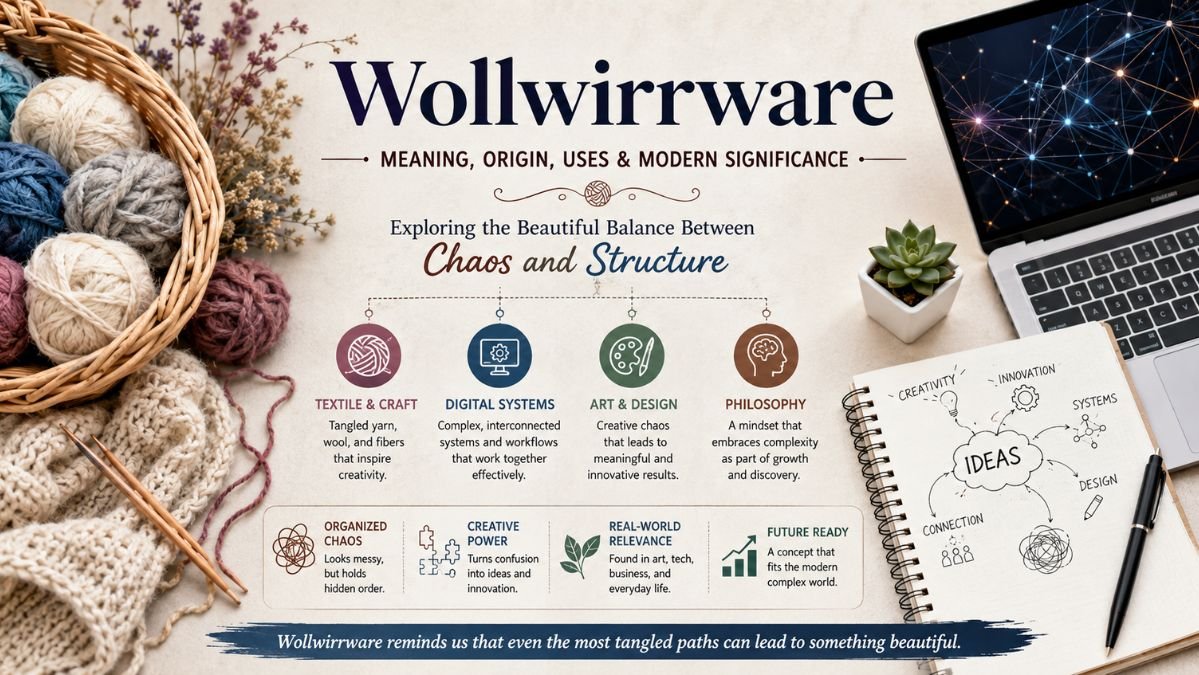
In recent digital and creative discussions, the term “wollwirrware” has emerged as a fascinating concept that blends ideas of structure, chaos, creativity, and material culture. Although not a traditional dictionary word, it is increasingly used in blogs and conceptual writing to describe systems, materials, or creative processes that appear tangled or complex but still maintain hidden order and purpose. Wollwirrware can be applied to textiles, digital ecosystems, design thinking, and even philosophical interpretations of organized chaos.
he growing interest in wollwirrware reflects a broader cultural shift toward appreciating complexity rather than avoiding it. In a world filled with interconnected systems, from technology to art, this concept helps explain how seemingly messy structures can still produce meaningful and functional outcomes.
Quick Information Table: Wollwirrware Overview
| Attribute | Description |
|---|---|
| Term | Wollwirrware |
| Type | Conceptual / Theoretical Term |
| Origin | Modern linguistic blend with Germanic influence |
| Core Idea | Organized chaos with creative structure |
| Fields of Use | Art, textiles, digital systems, philosophy, design |
| Symbolism | Creativity emerging from complexity |
| Nature | Non-dictionary, conceptual word |
Understanding Wollwirrware in Simple Terms
At its core, wollwirrware represents the idea of something that looks messy or tangled on the surface but contains an internal logic or structure. The word itself is often broken down into three implied components:
- “Woll” suggesting wool or fiber-like material
- “Wirr” meaning tangled, confused, or chaotic
- “Ware” meaning goods, materials, or products
When combined, these elements suggest “tangled material goods” or more symbolically, “structured chaos in form and function.”
This makes wollwirrware a flexible concept used across multiple disciplines rather than a fixed definition.
The Conceptual Origin of Wollwirrware
Although wollwirrware does not originate from classical linguistic dictionaries, it is believed to have evolved from modern creative and online communities. Writers and thinkers began using it as a metaphor for systems that are:
- Complex but functional
- Disordered yet meaningful
- Tangled yet interconnected
The Germanic influence in its structure gives it a sense of authenticity and depth, even though it remains an informal or conceptual term.
Over time, it has been adopted in blogs and creative discussions to explain phenomena in technology, design, and art where traditional labels fail to capture complexity.
Wollwirrware in Creative Arts and Design
One of the strongest applications of wollwirrware is in the field of creative arts and design thinking. Artists and designers often encounter situations where ideas do not form in straight lines but instead evolve through messy experimentation.
In this context, wollwirrware represents:
- Sketches that look chaotic but lead to final masterpieces
- Mixed textures and layered compositions
- Abstract art that hides structured meaning
- Experimental design processes
Rather than seeing disorder as a problem, designers embracing wollwirrware treat it as a necessary phase of innovation.
For example, a painter might begin with random strokes that seem disorganized, but over time these strokes form a coherent visual story. That transformation from chaos to clarity is the essence of wollwirrware.
Wollwirrware in Textile and Craft Culture
In textile-related interpretations, wollwirrware is often associated with wool, yarn, and knitting processes. Anyone who works with yarn understands how easily materials can become tangled.
Within this space, wollwirrware refers to:
- Tangled yarn bundles
- Mixed fiber structures
- Unorganized knitting materials before processing
- Handmade crafts that embrace irregular textures
However, instead of viewing these tangles as mistakes, craft communities sometimes see them as opportunities. A tangled yarn mass can inspire new textures, patterns, or creative designs.
This interpretation gives wollwirrware a positive meaning: beauty hidden inside disorderly materials.
Digital Interpretation of Wollwirrware
In the modern digital world, wollwirrware has taken on a new meaning related to complex systems and interconnected technologies.
Today’s digital environments are rarely simple. They include:
- Multiple software platforms
- APIs and integrations
- Cloud-based ecosystems
- Data networks and workflows
Wollwirrware is used to describe situations where these systems become highly interconnected and difficult to untangle, yet still function effectively.
For example:
- A business using dozens of interconnected apps
- A startup managing complex automation workflows
- A digital platform integrating multiple services
Even if the system appears messy from the outside, it continues to operate efficiently—this is digital wollwirrware.
Philosophical Meaning of Wollwirrware
Beyond physical and digital interpretations, wollwirrware also carries a philosophical meaning. It reflects how life itself often works:
- Human experiences are rarely linear
- Decisions are influenced by multiple overlapping factors
- Growth often comes through confusion and trial
Wollwirrware symbolizes the idea that:
“Order does not always come from simplicity; sometimes it emerges from complexity.”
This makes it relevant in discussions about psychology, creativity, and even personal development.
It encourages individuals to accept confusion as part of growth rather than something to be avoided.
Why Wollwirrware Matters Today
In today’s fast-moving world, complexity is unavoidable. Whether in technology, art, or daily life, systems are becoming more layered and interconnected.
Wollwirrware matters because it:
- Helps describe modern complexity in simple terms
- Encourages acceptance of creative disorder
- Supports innovation through experimentation
- Bridges the gap between chaos and structure
Instead of trying to simplify everything, wollwirrware teaches us to understand and work with complexity.
Practical Examples of Wollwirrware in Real Life
To better understand the concept, here are some real-life examples:
1. Startup Ecosystems
Startups often use multiple tools, platforms, and workflows simultaneously. While it may seem chaotic, this structure allows rapid innovation.
2. Art Studios
Creative studios often have messy environments filled with unfinished projects, sketches, and prototypes—this is practical wollwirrware.
3. Software Development
Codebases with multiple dependencies and modules may appear tangled but are essential for building large systems.
4. Personal Life Organization
Even daily routines can feel like wollwirrware when schedules, tasks, and responsibilities overlap.
The Positive Side of Complexity
One of the most important lessons from wollwirrware is that complexity is not always negative. In fact, it can be:
- A source of creativity
- A driver of innovation
- A reflection of real-world systems
- A natural state of growth
Instead of forcing strict order, embracing structured chaos can lead to better outcomes in many fields.
Future of the Wollwirrware Concept
As digital systems grow and creative industries evolve, the concept of wollwirrware is likely to become more relevant. It may be used more widely in:
- AI system design
- Creative industries
- Organizational theory
- Educational models
Its flexibility makes it adaptable to future innovations where complexity continues to increase.
Conclusion
Wollwirrware is more than just a word—it is a way of understanding complexity in modern life. Whether seen in tangled yarn, digital systems, or creative processes, it represents the balance between chaos and structure. Instead of fearing disorder, wollwirrware encourages us to recognize the hidden patterns within it.
By accepting this concept, artists, designers, and thinkers can transform confusion into creativity and complexity into innovation.
In essence, wollwirrware reminds us that even the most tangled systems can hold meaning, beauty, and purpose.