Ru Ext – Understanding the Legacy Search Query and Its Importance in Web Research

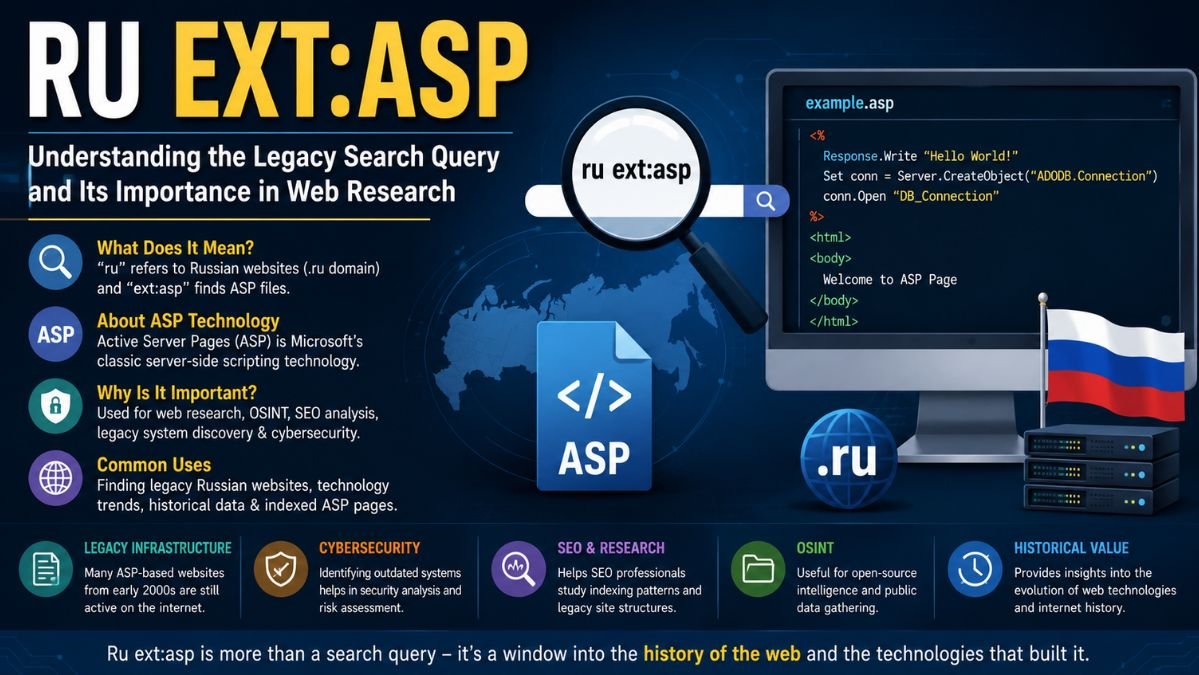
The internet is filled with specialized search queries that help researchers, cybersecurity experts, and SEO professionals uncover valuable information. One such query is “ru ext.” While it may appear confusing to the average internet user, this keyword has gained attention among individuals who study web technologies, legacy websites, search engine indexing, and online intelligence gathering.
The term combines a geographic reference with a file extension search operator, making it useful for locating specific types of web pages across Russian websites. Understanding how “ru ext” works can provide insight into older web technologies, historical internet infrastructure, and the evolution of modern websites.
Quick Bio Table
| Information | Details |
|---|---|
| Keyword | Ru Ext |
| Type | Technical Search Query |
| Related Technology | Active Server Pages (ASP) |
| Primary Usage | Web Research, SEO, OSINT |
| Associated Domain | Russian Websites (.ru) |
| Developed Technology | Microsoft ASP |
| Common Users | Researchers, SEO Experts, Security Analysts |
| Purpose | Finding ASP-based web pages |
| Modern Alternative | ASP.NET, PHP, Node.js, Python Frameworks |
| Popularity | Niche Technical Keyword |
What Does Ru Ext Mean?
The keyword “ru ext” is generally interpreted as a search query designed to locate ASP files on websites associated with Russia or the .ru domain. The query consists of two separate components:
- ru refers to Russian websites or websites using the .ru country-code domain.
- ext is a search operator that identifies pages using the ASP file extension.
When used together, the search attempts to discover web pages built with Microsoft’s classic Active Server Pages technology that exist within Russian web domains.
Although modern search engines may handle operators differently than they did years ago, the concept remains useful for researchers looking for specific technologies on the internet.
Understanding ASP Technology
ASP stands for Active Server Pages, a web development technology introduced by Microsoft during the late 1990s. It was one of the earliest server-side scripting frameworks that allowed websites to generate dynamic content.
Before ASP became popular, many websites consisted only of static HTML pages. ASP changed this by enabling developers to create pages that interacted with databases, processed forms, and generated customized content for visitors.
Some key features of ASP included:
- Server-side scripting
- Database connectivity
- Dynamic web content generation
- Integration with Microsoft technologies
- Support for VBScript and JScript
At the time, ASP represented a major advancement in web development and helped businesses build more interactive websites.
The Rise of ASP-Based Websites
During the early internet era, thousands of organizations adopted ASP technology. Government agencies, educational institutions, corporations, and small businesses used ASP to build their online presence.
The technology became especially popular because it worked seamlessly with Microsoft’s Internet Information Services (IIS) web server. Organizations already using Windows-based infrastructure found ASP to be an accessible solution for web development.
As a result, many websites launched between the late 1990s and early 2000s contained URLs ending with:
- .asp
- default.asp
- index.asp
- login.asp
- search.asp
Even today, some legacy websites continue to use these pages.
Why Is Ru Ext Important?
The keyword has become valuable for several reasons. It serves as a gateway to discovering older web systems and understanding how the internet evolved over time.
Historical Research
Researchers often use specialized search queries to identify websites built with older technologies. Since many ASP websites originated during the early years of web development, locating them can provide historical insight into internet infrastructure.
By examining these websites, researchers can learn how organizations previously managed online content and digital services.
Legacy System Discovery
Many organizations continue to operate systems built decades ago. In some cases, ASP applications remain active because replacing them would require significant resources and development effort.
The ru ext query can help identify such systems and reveal how legacy technologies are still being used today.
Technology Analysis
Technology analysts frequently study the adoption and decline of software platforms. Searching for ASP-based pages within specific regions helps researchers understand how technology trends have evolved over time.
This information may contribute to reports about web modernization, software migration, and digital transformation initiatives.
Ru Ext and Search Engine Operators
Search operators are special commands used to refine search engine results. They allow users to search more precisely and locate information that would otherwise be difficult to find.
Examples include:
- site:
- filetype:
- inurl:
- intitle:
- ext:
The ext operator focuses on file extensions. When combined with a country code or domain reference, it becomes a powerful research tool.
Examples include:
- site ext
- ext government websites
- inurl:.asp site
These searches can help uncover pages built using classic ASP technology.
Connection to OSINT Research
Open-Source Intelligence (OSINT) involves collecting publicly available information from online sources. Researchers use advanced search techniques to discover data that may not appear in standard searches.
The ru ext keyword is often discussed within OSINT communities because it helps identify websites built using specific technologies.
OSINT professionals may use such searches to:
- Map website technologies
- Identify legacy systems
- Study regional web development trends
- Conduct public infrastructure research
- Analyze historical internet resources
Importantly, ethical OSINT research focuses on publicly available information and respects legal boundaries.
Cybersecurity Relevance
Cybersecurity professionals often study legacy technologies because older systems may have unique maintenance challenges.
Many ASP websites were created years ago and may not have received consistent updates. Understanding where such technologies exist can help organizations assess modernization needs and security practices.
Security researchers frequently examine:
- Legacy software environments
- Outdated web frameworks
- Unsupported applications
- Historical server configurations
However, identifying a technology does not automatically indicate a security issue. Many organizations maintain legacy systems responsibly and continue to apply necessary updates and protections.
The Evolution from ASP to Modern Frameworks
Over time, web development technologies evolved significantly.
ASP eventually gave way to newer frameworks such as:
ASP.NET
Microsoft introduced ASP.NET as a more advanced platform with improved performance, security, and scalability.
PHP
PHP became one of the most widely used server-side scripting languages, powering millions of websites worldwide.
Java Frameworks
Enterprise organizations increasingly adopted Java-based solutions for complex web applications.
Python Frameworks
Frameworks such as Django and Flask simplified modern web development.
JavaScript Ecosystems
Node.js transformed JavaScript into a powerful server-side development platform.
Despite these advances, classic ASP websites can still be found online, particularly among long-established organizations.
SEO Perspective of Ru Ext
From an SEO standpoint, ASP-based websites represent an interesting area of study.
Older websites often have:
- Long-established domain authority
- Historical backlink profiles
- Legacy URL structures
- Archived search engine records
SEO professionals sometimes analyze these websites to understand how search engine optimization practices have changed over time.
The keyword ru ext can therefore serve as a research tool for investigating older web architectures and indexing patterns.
Challenges of Legacy ASP Websites
Organizations operating classic ASP websites may encounter several challenges:
Maintenance
Finding developers experienced with older technologies can be difficult.
Modern Compatibility
Legacy applications may not integrate easily with modern platforms and services.
Scalability
Older systems may require significant updates to handle current traffic demands.
User Experience
Modern users expect responsive designs and mobile compatibility, which many legacy systems were not originally built to support.
Because of these challenges, many organizations eventually migrate to newer platforms.
The Future of ASP-Based Infrastructure
Although classic ASP is no longer the dominant web development technology it once was, its influence remains visible across the internet.
Thousands of websites, applications, and databases were built using ASP. Some continue operating successfully today, while others have been modernized or replaced.
Search queries such as ru ext provide a fascinating glimpse into the internet’s technological history. They remind us how web development has evolved from simple server-side scripts into the highly sophisticated frameworks that power today’s digital world.
For researchers, SEO professionals, cybersecurity analysts, and technology enthusiasts, understanding keywords like ru ext offers valuable insight into the foundations of the modern web.
As digital transformation continues worldwide, legacy technologies will gradually become less common. However, they remain an important part of internet history and continue to influence how modern web systems are designed and maintained.