Tech eTrueSports: How Technology is Transforming the Future of Competitive Gaming

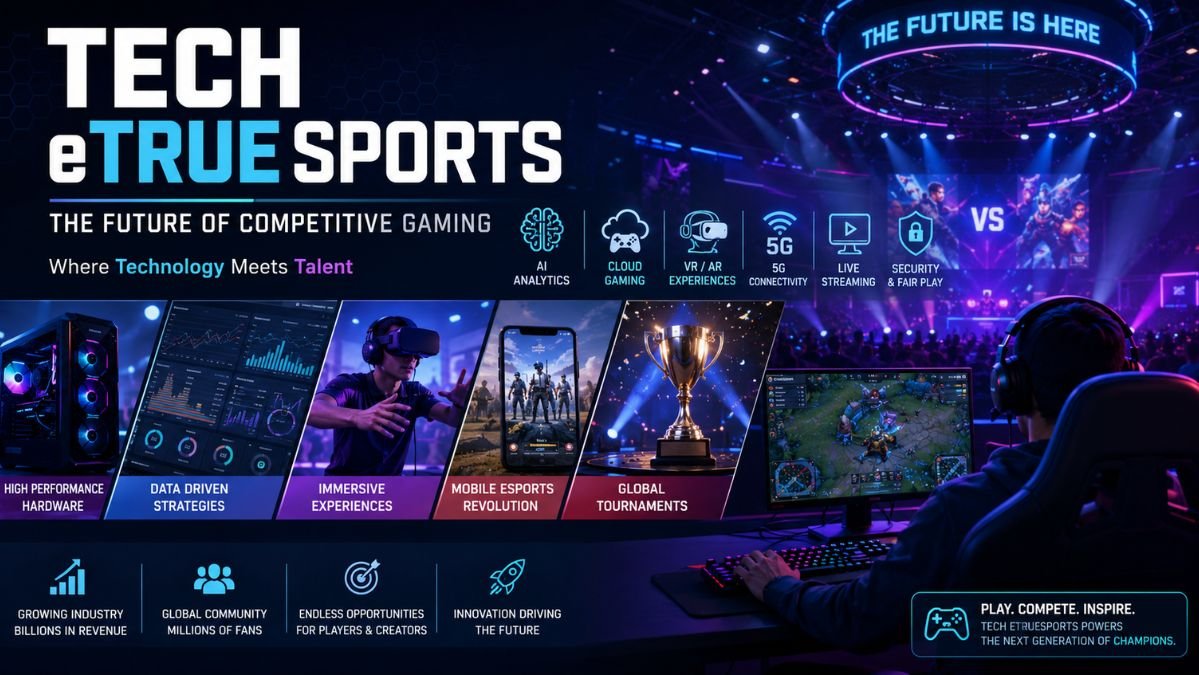
The esports industry has evolved from small local gaming competitions into a massive global entertainment ecosystem worth billions of dollars. At the center of this transformation is Tech eTrueSports, a term that represents the powerful combination of esports and advanced technology. From artificial intelligence and cloud gaming to VR tournaments and high-speed streaming, technology is reshaping how players compete and how fans experience competitive gaming.
Today, esports is no longer just about gaming skills. It is now deeply connected with innovation, hardware performance, data analytics, networking systems, and immersive digital experiences. Tech eTrueSports highlights this new era where cutting-edge technology powers every aspect of competitive gaming.
Quick Bio Table About Tech eTrueSports
| Topic | Details |
|---|---|
| Keyword | Tech eTrueSports |
| Industry | Esports & Gaming Technology |
| Main Focus | Competitive gaming powered by modern technology |
| Key Technologies | AI, VR, AR, Cloud Gaming, 5G, Analytics |
| Popular Features | Streaming, esports tournaments, gaming hardware |
| Audience | Gamers, esports fans, streamers, tech enthusiasts |
| Industry Growth | Rapidly expanding global market |
| Future Trends | Metaverse gaming, wearable tech, AI coaching |
Understanding the Meaning of Tech eTrueSports
Tech eTrueSports refers to the technological side of modern esports. It includes all the systems, platforms, and innovations that improve competitive gaming experiences. This covers both player performance and audience engagement.
Unlike traditional gaming, esports depends heavily on high-performance systems. Professional players require fast internet, powerful gaming PCs, advanced monitors, and real-time analytics to compete at the highest level. Tech eTrueSports focuses on creating these advanced environments.
The concept also includes streaming technology, tournament management systems, anti-cheat software, and cloud-based gaming platforms. As esports becomes more professional, technology continues to play a bigger role in making competitions fair, accessible, and entertaining.
The Evolution of Esports Technology
Esports has come a long way since the early arcade competitions of the 1970s and 1980s. Initially, gaming tournaments were small community events with limited audiences. However, the rise of the internet changed everything.
In the 1990s, multiplayer games like Counter-Strike and StarCraft introduced competitive online gaming. During the 2000s, streaming platforms allowed gamers to broadcast live matches to global audiences. This created the foundation for modern esports culture.
Today, Tech eTrueSports represents a highly advanced industry supported by:
- Artificial intelligence
- Real-time cloud computing
- Professional broadcasting systems
- Virtual reality experiences
- High-speed 5G connectivity
- Data-driven coaching tools
This rapid technological growth has turned esports into one of the fastest-growing entertainment sectors in the world.
Artificial Intelligence in Tech eTrueSports
Artificial intelligence is becoming one of the most important technologies in esports. AI tools are helping players improve performance while also enhancing tournament management.
AI-Powered Player Training
Professional gamers now use AI-based software to analyze their gameplay. These systems can track:
- Reaction times
- Accuracy levels
- Movement patterns
- Strategic mistakes
- Team coordination
AI coaching platforms provide personalized recommendations that help players improve faster than traditional training methods.
Match Predictions and Analytics
Esports teams also use AI for match analysis. Advanced algorithms study opponent behavior, previous matches, and gameplay patterns to predict strategies and improve decision-making.
Anti-Cheat Technology
Cheating remains a major concern in competitive gaming. Tech eTrueSports platforms use AI-powered anti-cheat systems that detect suspicious activity in real time, helping maintain fair competition.
Cloud Gaming and the Future of Accessibility
Cloud gaming has revolutionized how people access esports titles. Instead of requiring expensive gaming computers, cloud platforms allow users to stream games directly from powerful servers.
This innovation offers several benefits:
- Lower hardware costs
- Faster game access
- Cross-platform gaming
- Improved global accessibility
Cloud gaming also helps tournament organizers run competitions more efficiently because players can compete from different locations without needing identical hardware setups.
As internet infrastructure improves globally, cloud gaming is expected to become even more important in the esports industry.
Virtual Reality and Augmented Reality in Esports
Virtual Reality (VR) and Augmented Reality (AR) are opening new possibilities for immersive esports experiences.
Virtual Reality Tournaments
VR esports allows players to physically interact inside digital environments. Instead of controlling characters with keyboards and controllers, players move naturally using VR headsets and motion-tracking systems.
Popular VR esports genres include:
- Shooting games
- Sports simulations
- Fighting competitions
- Racing games
Enhanced Spectator Experiences
AR technology improves live broadcasts by adding real-time statistics, player information, and interactive visuals to esports streams. Fans can enjoy more engaging and informative viewing experiences during tournaments.
These immersive technologies are expected to play a major role in the future of Tech eTrueSports.
High-Performance Gaming Hardware
Gaming hardware is the backbone of competitive esports. Professional players rely on advanced equipment to maximize speed, precision, and comfort.
Essential Gaming Hardware
Common esports equipment includes:
- High-refresh-rate monitors
- Mechanical keyboards
- Precision gaming mice
- Noise-canceling headsets
- Custom gaming PCs
- Gaming chairs
Modern gaming hardware is designed specifically for low latency and faster response times. Even a small performance advantage can make a huge difference in professional esports competitions.
The Role of 5G and Fast Internet
Internet speed is one of the most critical elements in online gaming. High latency can negatively impact player performance and tournament fairness.
5G technology is improving esports by offering:
- Lower latency
- Faster downloads
- Stable online connections
- Better mobile gaming experiences
With 5G networks expanding globally, mobile esports competitions are becoming more competitive and accessible than ever before.
Streaming Technology and Content Creation
Streaming has become a central part of the esports ecosystem. Millions of viewers watch tournaments and gaming content daily on streaming platforms.
Importance of Streaming
Streaming technology allows:
- Live tournament broadcasts
- Audience interaction
- Global esports coverage
- Monetization opportunities for creators
Professional streamers often combine gaming skills with entertainment content, creating massive online communities.
Tech eTrueSports continues to improve broadcasting quality through:
- Multi-camera production systems
- Real-time overlays
- AI-generated highlights
- Interactive audience tools
These technologies help esports compete with traditional sports entertainment.
Mobile Esports Expansion
Mobile gaming is one of the fastest-growing segments of the esports industry. Improved smartphones and internet infrastructure have made competitive mobile gaming highly popular.
Reasons for Mobile Esports Growth
- Affordable smartphones
- Better mobile processors
- Improved internet access
- Cross-platform connectivity
- Easy accessibility for new gamers
Games like battle royales, multiplayer shooters, and mobile strategy games are attracting millions of competitive players worldwide.
Mobile esports tournaments are now offering large prize pools and international recognition, further strengthening the Tech eTrueSports movement.
Data Analytics in Competitive Gaming
Data analytics is transforming esports strategy. Teams and organizations now rely on detailed statistics to improve performance.
Analytics Used in Esports
Teams monitor:
- Kill/death ratios
- Accuracy percentages
- Map performance
- Resource management
- Team coordination efficiency
Data-driven insights help coaches create smarter strategies and improve team performance over time.
Security and Fair Play
As esports grows, cybersecurity becomes increasingly important. Online tournaments must protect players, fans, and financial systems from fraud and cheating.
Tech eTrueSports platforms now use:
- Encrypted systems
- Secure payment methods
- AI anti-cheat software
- Player identity verification
- Blockchain technologies
These security improvements help maintain trust within the esports community.
The Future of Tech eTrueSports
The future of Tech eTrueSports looks extremely promising. Emerging technologies are expected to create even more immersive and intelligent gaming experiences.
Future Trends Include:
- AI-powered esports coaching
- Fully immersive VR arenas
- Metaverse gaming ecosystems
- Blockchain tournament systems
- Wearable gaming technology
- Holographic esports broadcasts
As innovation continues, esports may become one of the dominant entertainment industries worldwide.
Why Tech eTrueSports Matters
Tech eTrueSports is more than just gaming technology. It represents the future of digital entertainment, online competition, and interactive media. Technology is helping esports become faster, smarter, more immersive, and more accessible to global audiences.
For gamers, these innovations provide better tools and experiences. For fans, they create exciting new ways to watch and engage with esports content. For the gaming industry, Tech eTrueSports opens opportunities for growth, investment, and global expansion.
As technology evolves, competitive gaming will continue to break barriers and redefine modern entertainment. Platforms, developers, streamers, and esports organizations are all contributing to a future where technology and gaming work together like never before.